

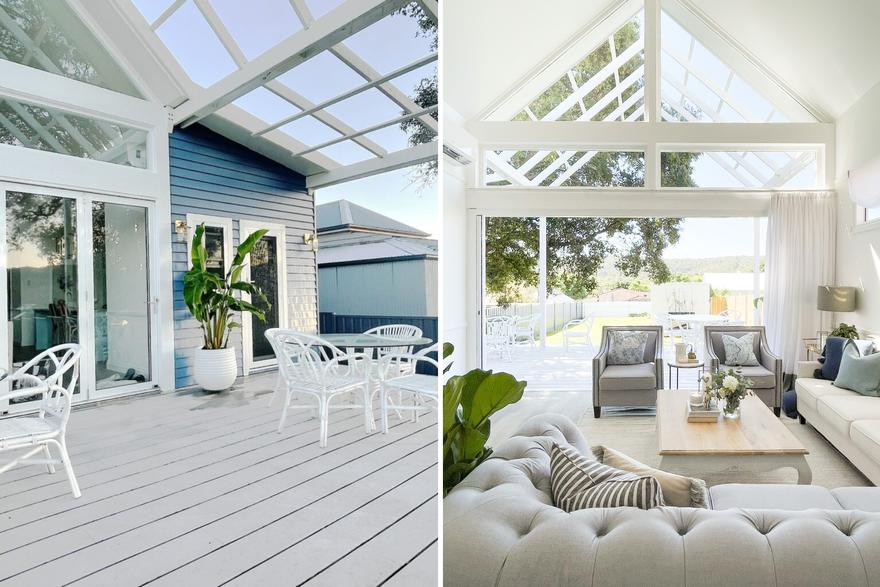
Most property stylists know the basics: neutral palette, good light, declutter, fresh flowers. What fewer stylists understand is why those things work — and how to use that understanding to create spaces that don't just look good, but feel genuinely good to be in.
Biophilic design is the answer to that "why."
I've been training property stylists for over a decade. In that time, biophilic design has moved from a niche architectural concept to one of the most significant trends in how buyers experience and respond to property. Understanding it — even at a foundational level — gives stylists a meaningful edge.
Here's what it is, why it works, and how it applies to your practice.
What Is Biophilic Design?
Biophilic design is the practice of incorporating elements of the natural world into built environments — not as decoration, but as a fundamental design principle rooted in human biology.
The term comes from "biophilia" — a concept popularised by biologist E.O. Wilson in the 1980s, describing the innate human affinity for nature and living systems. We evolved in natural environments over hundreds of thousands of years. Our nervous systems are calibrated to respond to natural light, organic forms, moving water, plants, and natural materials. When we encounter these things in a built space, something in us relaxes.
Biophilic design takes that biological reality seriously. It's not about putting a plant in the corner. It's about understanding which natural elements have the most significant impact on human wellbeing — and designing spaces that deliver them intentionally.
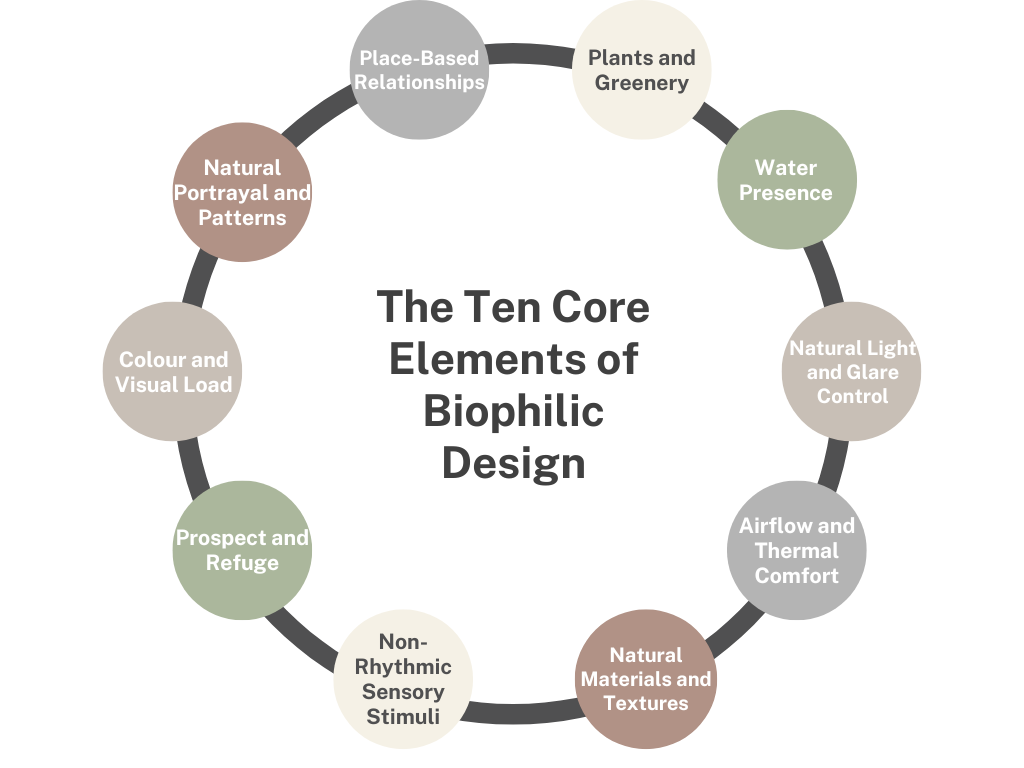
The Ten Core Elements of Biophilic Design
In practice, biophilic design works across ten core elements. Not every property needs all ten — but understanding the full framework helps stylists make intentional choices rather than intuitive ones.
1 — Dynamic Natural Light and Glare Control
Natural light that changes through the day — morning warmth, afternoon softness — signals safety and time to the nervous system. Glare, by contrast, creates stress. Biophilic styling maximises natural light while managing harsh direct sun.
2 — Plants and Greenery
Living plants are the most accessible biophilic element. They signal life, growth, and clean air. Even a single well-placed plant in a room changes how it feels.
3 — Water Presence
The sound and sight of water — even a small feature — has a measurable calming effect. In property styling, this might be as simple as a glass bowl of water with stones, or a small tabletop feature in an outdoor area.
4 — Natural Materials and Textures
Timber, stone, linen, wool, rattan, leather — materials that come from the natural world engage the senses in ways synthetic materials don't. They have variation, warmth, and tactile interest.
5 — Airflow and Thermal Comfort
Spaces that feel fresh and well-ventilated feel alive. Stale, still air is one of the fastest ways to make a property feel unwelcoming — and it's often overlooked in styling.
6 — Non-Rhythmic Sensory Stimuli
The gentle movement of leaves, the flicker of a candle, the sound of birds outside — subtle, unpredictable sensory input that mimics the natural world. In styling, this might be a candle, a plant near a window, or a water feature.
7 — Prospect and Refuge
Humans feel most comfortable in spaces that offer both prospect (a view, a sense of openness) and refuge (a sheltered, enclosed feeling). A reading nook beside a window is a classic example — refuge with prospect.
8 — Colour and Visual Load
Natural colour palettes — greens, earthy neutrals, warm whites, stone tones — reduce visual stress. High visual load (too many colours, patterns, or objects) activates the nervous system. Biophilic styling keeps the palette calm and grounded.
9 — Natural Representations and Patterns
Artwork, textiles, and objects that reference the natural world — botanical prints, wave patterns, organic forms — activate the same neural pathways as the real thing, even when the real thing isn't present.
10 — Place-Based Relationships
Design that connects a space to its specific location — local timbers, regional stone, native plants, views of the surrounding landscape — creates a sense of belonging and rootedness that buyers feel even if they can't name it.
Why Buyers Respond to Biophilic Design
The research on this is consistent and compelling.
Studies show that exposure to biophilic elements reduces cortisol (the stress hormone), lowers heart rate and blood pressure, and increases feelings of calm and wellbeing. These effects happen quickly — within minutes of entering a space — and they happen whether or not the person is consciously aware of the design.
For property stylists, this matters enormously. Buyers make decisions emotionally before they make them rationally. The feeling a property creates in the first few minutes of a walk-through is the single most powerful driver of purchase intent. Biophilic design is one of the most reliable ways to create a positive emotional response — not through tricks or staging gimmicks, but through elements that the human nervous system is genuinely wired to respond to.
A property that feels calm, fresh, and connected to the natural world is a property that buyers want to live in. That's the commercial case for biophilic design in property styling.
How to Apply Biophilic Design in Property Styling
You don't need a full renovation to apply biophilic principles. Many of the most effective interventions are low-cost and immediately achievable.
Start with light. Open curtains, clean windows, remove anything blocking natural light. If the property has poor natural light, use warm-toned artificial lighting to mimic it — cool white light is the enemy of biophilic warmth.
Add living plants. A fiddle-leaf fig in a living room, a trailing pothos in a bathroom, fresh herbs on a kitchen bench. Living plants signal life and care. They're one of the highest-impact, lowest-cost biophilic interventions available to a stylist.
Choose natural materials. When selecting furniture and accessories, prioritise timber, linen, stone, rattan, and wool over plastic, glass, and synthetic fabrics. The tactile and visual warmth of natural materials is immediately felt.
Keep the palette grounded. Earthy neutrals, warm whites, sage greens, stone tones. Avoid high-contrast, high-saturation colour schemes that increase visual load.
Create prospect and refuge. Arrange furniture so there's a sense of both openness and shelter — a sofa with its back to a wall, facing a window or a view. A reading chair tucked into a corner with a lamp. These arrangements feel instinctively right because they are.
Bring in natural representations. Botanical artwork, organic-form ceramics, textiles with natural patterns. These don't need to be expensive — a well-chosen print or a handmade ceramic bowl can shift the feel of a room significantly.
Biophilic Design and the IIHS Course
The Institute of Home Staging is the only property styling training institute in Australia that includes biophilic design as a dedicated module in its curriculum. This isn't a trend we've bolted on. It's a framework that makes stylists better at their core job — creating spaces that buyers respond to emotionally. Understanding why natural light, living plants, and organic materials work gives stylists the confidence to make intentional choices, not just intuitive ones. If you're interested in learning property styling with this level of depth, the IIHS course is self-paced, online, and includes four full-day immersion sessions per year.
Learn more at instituteofhomestaging.com.
FREQUENTLY ASKED QUESTIONS
Q: What is biophilic design in simple terms?
A: Biophilic design is the practice of bringing elements of the natural world into built spaces — natural light, plants, water, natural materials, organic forms — based on the understanding that humans are biologically wired to respond positively to nature. It's not just about aesthetics. It's about how spaces make people feel, and why.
Q: Why does biophilic design matter in property styling?
A: Buyers make purchase decisions emotionally before they make them rationally. The feeling a property creates in the first few minutes of a walk-through is the most powerful driver of purchase intent. Biophilic design creates a calm, welcoming, emotionally positive response — not through staging tricks, but through elements the human nervous system is genuinely wired to respond to. A property that feels good to be in is a property buyers want to own.
Q: What are the most important biophilic design elements for property styling?
A: For most properties, the highest-impact elements are: natural light (maximise it), living plants (add them), natural materials (timber, linen, stone over synthetic), a grounded colour palette (earthy neutrals, warm whites), and prospect and refuge in furniture arrangement. These five elements alone can significantly shift how a property feels to a buyer.
Q: Is biophilic design expensive to implement in a styled property?
A: Not necessarily. Many of the most effective biophilic interventions are low-cost: opening curtains to maximise light, adding living plants, choosing natural-material accessories, keeping the colour palette calm. The more capital-intensive elements (water features, architectural changes, custom timber joinery) are relevant for renovation projects but not required for property styling.
Q: How is biophilic design different from just using plants and natural colours?
A: Plants and natural colours are two elements of biophilic design — but the framework is broader. It includes natural light quality, airflow and thermal comfort, prospect and refuge in spatial arrangement, non-rhythmic sensory stimuli (movement, sound), place-based connections to the local environment, and natural patterns and representations. Understanding the full framework helps stylists make intentional choices across all of these dimensions, not just the most obvious ones.
Q: Does biophilic design actually affect property sale prices?
A: The research on biophilic design in commercial and residential settings consistently shows that spaces incorporating biophilic elements are perceived as more valuable, more desirable, and more comfortable. In property styling specifically, the mechanism is emotional — buyers who feel good in a property are more likely to make an offer, and more likely to offer at or above asking price. The effect is real, even if it's difficult to isolate in sale price data.
Q: Can biophilic design be applied to apartments and small spaces?
A: Yes — and it's often more impactful in smaller spaces, where the quality of the environment has a more concentrated effect on how the space feels. In apartments, the key biophilic interventions are: maximising natural light, adding plants (even small ones on benches and shelves), choosing natural-material furniture and accessories, and keeping the visual load low. A small apartment that feels calm and connected to the natural world is far more appealing than a larger one that feels cluttered and synthetic.
Q: Where can I learn more about biophilic design for property styling?
A: The Institute of Home Staging (IIHS) is the only property styling training institute in Australia that includes biophilic design as a dedicated module. The course is self-paced and online, with four full-day immersion sessions per year. Visit instituteofhomestaging.com for more information.

Comments