

Biophilic design sounds like an architectural concept — and it is. But its principles are just as relevant to property styling as they are to building design. In fact, many of the most effective biophilic interventions are exactly the kind of thing a property stylist can implement in a single installation day.
I've been training property stylists for over a decade. Biophilic design is now a dedicated module in the IIHS curriculum — not because it's trendy, but because it makes stylists better at their core job. When you understand why buyers respond to natural light, living plants, and organic materials, you stop making intuitive choices and start making intentional ones.
Here's how to apply biophilic design principles practically, room by room.
Before You Start: The Biophilic Mindset
Biophilic design isn't about adding a plant and calling it done. It's a way of thinking about how a space makes people feel — and using elements of the natural world to create a specific emotional response. For property styling, that response is: calm, welcome, alive. A buyer who feels those things in the first few minutes of a walk-through is a buyer who wants to make an offer.
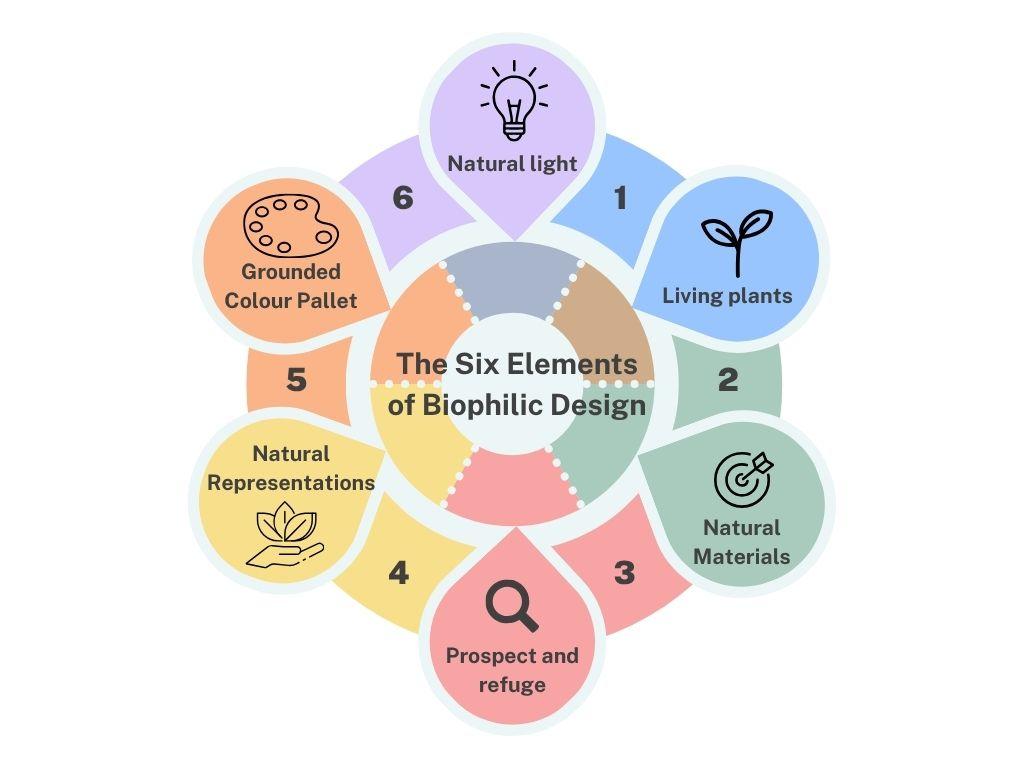
The framework has ten core elements (see our foundational guide: What Is Biophilic Design?). For property styling purposes, the most actionable are:
- Natural light (maximise it, manage glare)
- Living plants (add them strategically)
- Natural materials (timber, linen, stone, rattan, wool)
- Grounded colour palette (earthy neutrals, warm whites, sage greens)
- Prospect and refuge (furniture arrangement that feels instinctively right)
- Natural representations (botanical art, organic forms, nature-referencing textiles)
These six elements can be applied in every room, at every price point. Here's how.
Living Areas: The First Impression Room
The living area is where buyers form their first emotional impression of a property. It's the room that sets the tone for everything that follows — and it's where biophilic design has the most impact.
Light first. Open every curtain and blind. Clean the windows if needed. If the room has poor natural light, add warm-toned floor or table lamps to mimic it — cool white light kills the warmth biophilic design is trying to create.
Anchor with natural materials. A timber coffee table, a linen sofa, a wool rug, a rattan side table. These materials have warmth and tactile interest that synthetic alternatives don't. They don't need to be expensive — a well-chosen jute rug and a timber tray can shift the feel of a room significantly.
Add a statement plant. A fiddle-leaf fig, a large monstera, a mature olive tree in a pot. One well-placed, healthy plant in a living room signals life and care. It's one of the highest-impact, lowest-cost biophilic interventions available to a stylist.
Create prospect and refuge. Position the sofa with its back to a wall, facing a window or a view. Add a reading chair tucked into a corner with a lamp. These arrangements feel instinctively right because they mirror the environments humans evolved in — shelter with a view.
Keep the palette grounded. Earthy neutrals, warm whites, sage greens, stone tones. Avoid high-contrast, high-saturation colour schemes. The goal is calm, not excitement.
Kitchen and Dining: The Heart of the Home
Buyers spend a lot of time imagining themselves in the kitchen. Biophilic design in this space is about making it feel alive and nourishing — not just functional.
Fresh herbs on the bench. A small pot of basil, rosemary, or mint on the kitchen bench is one of the most effective biophilic styling moves available. It's living, it's fragrant, it signals that this is a space where good things happen. It costs almost nothing.
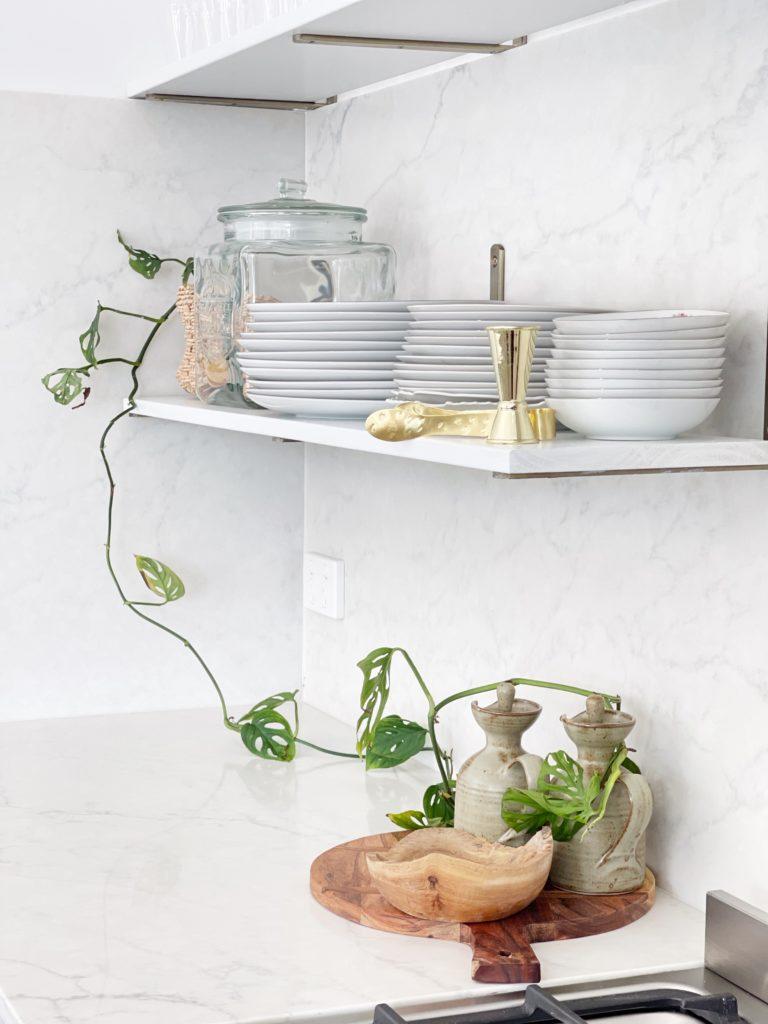
Natural materials on surfaces. A timber chopping board, a stone mortar and pestle, a ceramic bowl of fruit. These objects add warmth and organic texture to what is often a hard, reflective space.
Greenery in the dining area. A trailing plant on a shelf, a small succulent on the table, a vase of fresh eucalyptus or native flowers as a centrepiece. The dining area benefits from the same living-plant energy as the living room — it makes the space feel cared for and welcoming.
Manage the visual load. Kitchens accumulate clutter. Clear the benches completely, then add back only the biophilic elements — herbs, a fruit bowl, a timber board. Less is more. The goal is calm abundance, not busy functionality.
Bedrooms: Rest, Refuge, and Renewal
The bedroom is the most intimate space in a property — and buyers are imagining how they'll sleep, rest, and recover in it. Biophilic design in the bedroom is about creating a sense of deep refuge.
Linen bedding. Natural linen is the single most effective biophilic material in a bedroom. It has warmth, texture, and a lived-in quality that synthetic fabrics don't. It photographs beautifully and feels luxurious without being precious.
Soft, warm light. Bedside lamps with warm-toned globes. Sheer curtains that filter natural light rather than blocking it. The bedroom should feel like a retreat from the world — and light quality is the fastest way to create that feeling.
A plant in the corner. A peace lily, a snake plant, or a small pothos on a bedside table. Bedroom plants are a subtle but effective biophilic signal — they add life to a space that can otherwise feel static.
Natural representations. Botanical artwork above the bed, an organic-form ceramic on the bedside table, a textured throw in a natural fibre. These elements reference the natural world without requiring a full renovation.
Minimise visual load. The bedroom should feel like a sanctuary. Remove everything that isn't intentional. Every object should earn its place.
Bathrooms: Calm, Clean, and Connected
Bathrooms are often the hardest space to make feel biophilic — they're typically hard surfaces, artificial light, and limited space. But the principles still apply.
Plants that love humidity. A small fern, a peace lily, or a trailing pothos thrives in bathroom conditions. A single plant on a shelf or the edge of a bath transforms the feel of the space.
Natural materials as accessories. A timber bath tray, a stone soap dish, a linen hand towel, a rattan basket for towels. These small objects add organic warmth to what is often a cold, reflective space.
Warm light. If the bathroom has harsh overhead lighting, add a small lamp or candle to create warmth. Buyers should feel relaxed in a bathroom, not interrogated by fluorescent light.
Scent. A subtle, natural scent — eucalyptus, cedar, citrus — activates the olfactory biophilic response. A diffuser with a natural oil, or a small bunch of fresh eucalyptus hung in the shower, is enough.
Outdoor Spaces: The Biophilic Advantage
Outdoor areas are where biophilic design is most naturally expressed — and where many stylists underinvest. A well-styled outdoor space can be one of the most powerful selling features of a property.
Define the zones. Use outdoor rugs, furniture groupings, and plants to create distinct areas — a dining zone, a lounge zone, a garden zone. Prospect and refuge applies outdoors too: a sheltered seating area with a view of the garden is instinctively appealing.
Add living plants. Potted plants, hanging baskets, a herb garden in raised beds. Outdoor greenery signals that the space is alive and cared for. It also softens hard surfaces — concrete, paving, rendered walls — that can make outdoor areas feel harsh.
Natural materials. Timber outdoor furniture, stone or concrete planters, rattan or wicker accessories. The same principle applies outdoors as indoors: natural materials have warmth and texture that synthetic alternatives don't.
Water if possible. Even a small water feature — a bowl fountain, a birdbath — adds the sound and sight of water that has a measurable calming effect. In a small courtyard, it can be transformative.
A Note on Training
Understanding biophilic design at this level — knowing not just what to do but why it works — is what separates stylists who create beautiful spaces from stylists who create spaces buyers genuinely respond to. The Institute of Home Staging is the only property styling training institute in Australia that includes biophilic design as a dedicated module. The course is self-paced, online, with four full-day immersion sessions per year.
Learn more at instituteofhomestaging.com.
FREQUENTLY ASKED QUESTIONS
Q: What is the most impactful biophilic change I can make to a styled property?
A: Natural light, followed closely by living plants. Maximising natural light — opening curtains, cleaning windows, removing anything blocking it — is free and immediately transformative. Adding a statement plant (a large fiddle-leaf fig or monstera in the living room, fresh herbs in the kitchen) is the next highest-impact intervention. Both are achievable in every property, at every price point.
Q: Can biophilic design be applied to a property with no garden or outdoor space?
A: Yes. Biophilic design is about bringing elements of the natural world into a space — and most of those elements work indoors. Living plants, natural materials, natural light, organic forms, and a grounded colour palette can all be applied in apartments and properties with no outdoor space. A well-styled apartment with strong biophilic elements can feel more connected to the natural world than a poorly styled house with a garden.
Q: How many plants should I use in a styled property?
A: Quality over quantity. One large, healthy, well-placed plant in a room is more effective than five small, struggling ones. A statement plant in the living room, fresh herbs in the kitchen, a humidity-loving plant in the bathroom, and a small plant on a bedroom bedside table is a strong biophilic plant strategy for most properties. Don't overcrowd — the goal is calm, not a jungle.
Q: What natural materials work best in property styling?
A: Timber (coffee tables, shelving, chopping boards, bath trays), linen (bedding, cushions, throws, hand towels), stone (soap dishes, bowls, coasters), rattan and wicker (baskets, side tables, pendant lights), and wool (rugs, cushions, throws). These materials have warmth, texture, and tactile interest that synthetic alternatives don't — and they photograph beautifully.
Q: How do I apply biophilic design on a tight styling budget?
A: Focus on the highest-impact, lowest-cost interventions: natural light (free), living plants ($10–$50 each), fresh herbs on the kitchen bench ($5–$10), a linen throw on the sofa ($30–$80), a timber tray or chopping board ($20–$50), botanical artwork (printable or affordable prints), and a grounded colour palette (achieved through accessory selection, not paint). Biophilic design doesn't require expensive furniture — it requires intentional choices.
Q: Does biophilic design work in every style of property?
A: Yes — the principles adapt to the property's existing character. A coastal property leans into water references, natural timber, and light linen. A heritage home uses warm timber, botanical prints, and organic ceramics. A contemporary apartment uses clean-lined natural materials, statement plants, and a restrained palette. The biophilic elements change; the underlying principles — natural light, living plants, organic materials, calm palette — remain constant.
Q: How does biophilic design affect how a property photographs?
A: Significantly. Natural materials, living plants, and warm light all photograph better than synthetic materials, artificial plants, and cool light. Linen bedding has texture and depth that reads beautifully on camera. A large plant adds scale and life to a room that might otherwise feel flat. Warm light creates the golden-hour quality that makes property photos feel aspirational. Biophilic styling and great photography are natural allies.
Q: Is biophilic design taught in property styling courses?
A: It's not standard — most property styling courses focus on the practical and commercial aspects of the work without covering the science of why certain design choices work. The Institute of Home Staging (IIHS) is the only property styling training institute in Australia that includes biophilic design as a dedicated module, giving students a deeper understanding of buyer psychology and the principles behind effective staging.

Comments