

Thinking About Becoming a Property Stylist? Read This First
Interest in property styling often starts quietly. Someone notices how presentation changes the way homes feel. Friends comment on their eye for styling. Or they begin wondering whether their interest in interiors and property could become something more. But before deciding whether property styling is right for you, it helps to understand what the industry actually involves — and what studying property styling really means.
The Questions Most People Are Really Asking
Many people considering property styling share similar concerns, even if they don’t always say them out loud.
They wonder:
What if I invest in education and it doesn’t work out?
Is the industry already too competitive?
What if I enjoy styling but can’t replace my income?
Am I actually good enough to do this professionally?
These are reasonable questions.
And they deserve honest answers.
Property Styling Isn’t Just About Styling
One of the biggest misconceptions about property styling is that it’s simply decorating homes beautifully.
In reality, professional property styling sits inside the property industry — not just the design world.
Stylists must understand:
buyer behaviour
market expectations
property positioning
return on investment decisions
collaboration with agents and vendors.
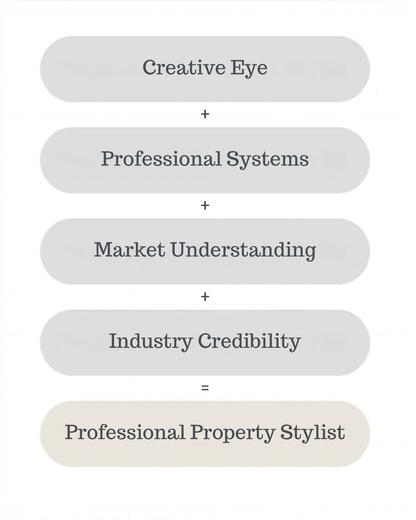
Many people discover they have natural styling ability. But successful property styling requires structure, systems, and industry understanding alongside creativity.
Styling talent is only one piece of the puzzle.
The Industry Is Not As Simple — Or As Saturated — As It Appears
Social media can make property styling look crowded or effortless.
In reality, many markets across Australia still rely on experienced stylists who understand how properties should be prepared for sale.
The difference often comes down to professionalism.
Real estate agents and clients look for stylists who demonstrate:
knowledge of the industry
confidence in decision-making
structured training
credibility and reliability.
Education plays an important role in building that professional confidence and authority.

The Opportunity Becomes Clear When You Look Beyond Social Media
One of the reasons property styling can appear saturated is because social media tends to show only a small portion of the market — the beautifully prepared homes that photograph well and attract attention online.
What is less visible are the thousands of properties that go to market every week across Australia that are not professionally prepared.
A simple search across major property portals quickly reveals homes that:
are poorly presented,
lack strategic preparation,
do not communicate clearly to buyers,
or miss opportunities to showcase their strengths.
These gaps exist in almost every market.
And they represent opportunity.
The Scale of Australia’s Property Market
To understand opportunity within property styling, it helps to look at the size of the property market itself.
Across Australia, hundreds of thousands of residential properties are sold each year.
Recent property settlement data shows more than 723,000 property transactions occurred across Australia in 2024 alone, representing hundreds of billions of dollars in property movement annually.
Other market analysis estimates roughly 550,000–560,000 homes changing hands annually in recent years, even during changing economic conditions.
This volume means that every month — and every week — large numbers of homes enter the market requiring preparation, marketing, and presentation decisions.
Even a small proportion of these properties represents significant ongoing demand for skilled professionals who understand how homes should be prepared for sale.
Visibility Does Not Equal Saturation
Because professionally styled homes photograph well, they are disproportionately visible online.
However, visibility does not always reflect the full market reality.
Many properties still go to market without strategic presentation.
Understanding how to identify these opportunities — rather than focusing only on highly polished examples — is part of learning how the property styling industry truly operates.
For many students, this realisation shifts their perspective:
The question changes from
"Is the industry full?"
to
"Where are the opportunities within such a large market?"
Australia has more than 11 million residential dwellings, with continual turnover as properties are bought and sold each year.
Even modest participation within this market represents meaningful professional opportunity.
How Professionals Learn to See Opportunity Differently
One of the most significant shifts people experience when learning property styling is not simply gaining styling skills — it is learning how to see properties differently.
Before studying the industry, many people notice only whether a home looks attractive or not.
After developing professional understanding, they begin to recognise something else entirely.
They start to see:
where presentation could change buyer perception,
which features should be highlighted,
how small preparation decisions influence emotional response,
and where opportunities exist that others may overlook.
What once appeared to be a competitive or crowded industry often begins to look very different.
Instead of seeing only the beautifully styled homes shared online, professionals learn to recognise the large number of properties that could benefit from clearer presentation and strategic preparation.
This shift is less about talent — and more about understanding.

Who Property Styling May Not Be Right For
While property styling can open exciting opportunities, it is not the right fit for everyone — and understanding this is important.
Property styling may not suit people who are looking for:
a guaranteed or instant income outcome
a purely decorative or creative hobby without strategic thinking
a career that does not involve collaboration with clients or industry professionals
quick success without learning or preparation
certainty before investing time in developing skills.
Professional property styling sits within the real estate environment, which means working with timelines, expectations, decision-making, and practical problem solving.
Like many industries, success comes from learning, experience, and commitment over time.
For people who enjoy learning, observing how properties work, and developing both creative and strategic skills, property styling can become deeply rewarding.
But the purpose of education is not to convince someone to pursue a specific path.
It is to help them understand the industry well enough to decide for themselves.
A Helpful Perspective
You do not need to decide today whether property styling becomes a career.
You only need to decide whether learning more about it feels worthwhile.
Why Education Matters More Than Guarantees
A common expectation today is wanting certainty before investing in learning.
People understandably ask:
"If I study property styling, will I succeed?"
But education rarely works that way.
Learning is not a guarantee of outcome — it is an investment in capability.
Studying property styling allows you to:
properly understand the industry
test your interest safely
develop real skills
build professional credibility
decide your next step with clarity.
In many cases, education is the moment someone moves from curiosity to confidence.
Property Styling Isn’t For Everyone — And That’s Okay
Property styling can be incredibly rewarding, but it also requires:
objective thinking
decision-making under pressure
collaboration with industry professionals
practical problem solving
adaptability across different properties and clients.
Some people discover styling becomes a career.
Others realise they simply enjoy understanding how property presentation works.
Both outcomes are valuable.
The purpose of learning is not to force a decision — but to allow informed choice.

Studying Property Styling Has Value Even If Your Path Changes
One of the most important things to understand is this:
Learning property styling does not lock you into a single future.
People study styling for many reasons:
Exploring a career change
Expanding creative skills
Improving renovation or investment outcomes
Understanding the property industry more deeply.
The Confidence That Comes From Understanding
Students often describe the biggest shift after studying property styling as confidence.
Not confidence from being told what to do — but confidence that comes from understanding:
How buyers think
What properties need before sale
How presentation decisions are made
How the industry actually operates.
From that point, opportunities become clearer.
And decisions feel less risky.

You Don’t Need To Have Everything Figured Out
Many people delay learning because they believe they must already know their final goal.
In reality, most professionals discover their direction after gaining knowledge — not before.
It is completely reasonable to begin learning simply because you are interested.
Exploration is often the first step toward opportunity.
A Safe Way To Explore Property Styling
The Art of Property Styling program at the International Institute of Home Staging was designed for exactly this stage.
It allows people to:
learn how property styling works
develop professional skills
understand the industry properly
explore possibilities without pressure.
You do not need to commit to a career decision before beginning.
You only need curiosity and a willingness to learn.
If You’ve Been Curious, That’s Usually Enough
Interest in property styling often appears long before people feel ready.
You do not need certainty.
You do not need guarantees.
You simply need a place to begin learning.
Investing in your own education is often the first step toward discovering what may be possible.
Frequently Asked Questions About Property Styling
Do I need to be naturally creative?
Creative instinct helps, but professional systems and understanding are equally important.inct helps, but professional systems and understanding are equally important.
Can property styling replace my income?
Some stylists build full-time careers, while others work part-time or integrate styling into existing work.
What if I study and decide it isn’t for me?
Education still provides valuable industry knowledge and transferable skills.
Is the industry already full?
Demand varies widely across regions, and professional credibility often differentiates successful stylists.
Do I need experience before studying?
No. Many students begin with curiosity rather than experience.
Ready to Learn More?
Start by understanding how property styling really works.